TOOL
InDesign, Figma
ABOUT
The research question that guided this project was "What makes Nüshu significant to women's cultural history and resistance?" This help shape my three core strategic objectives: raising public awareness of Nüshu's existence and history, celebrating the visual beauty of the script, and advocating for its preservation as a living cultural tradition rather than a historical artifact.
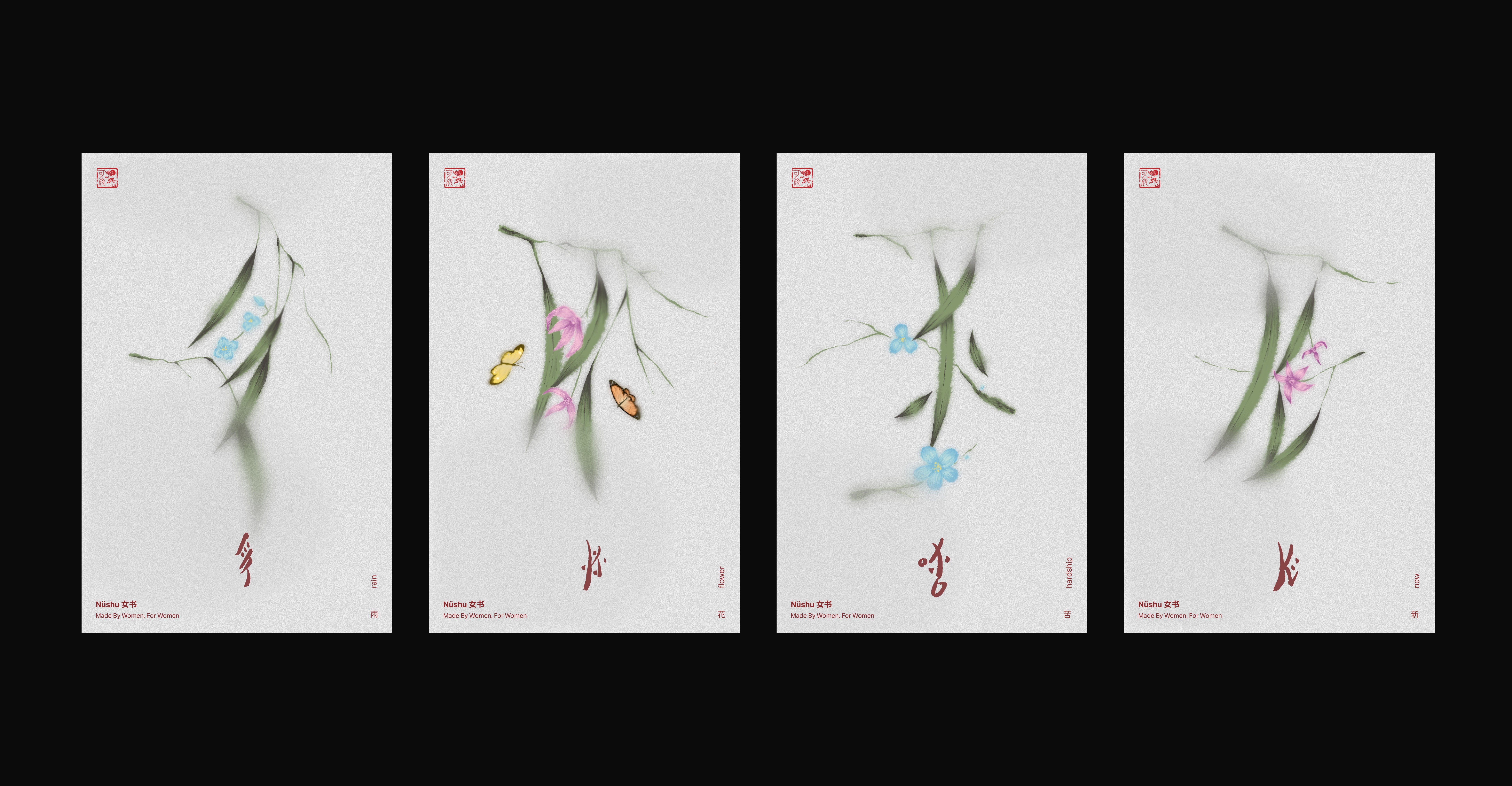
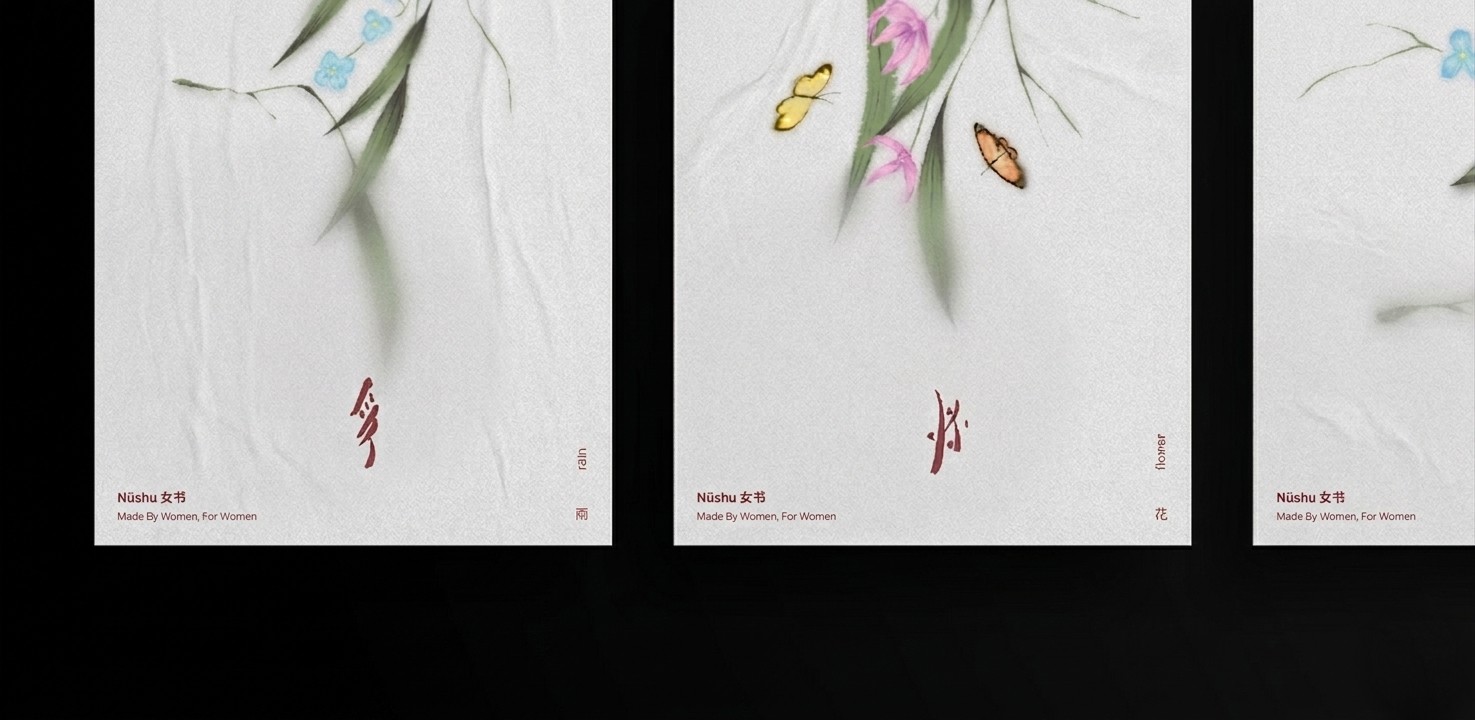
To achieve my first objective, the tête-bêche book presents Nüshu's origins and modern revival in an approachable, storytelling format with the book structured so that history and contemporary relevance speak to each other directly. To celebrate its visual character, a series of illustrations uses the willow leaf as a central motif, echoing the script's organic, flowing forms and grounding it in the natural imagery traditionally associated with it. The poster and postcard series extend this visual language into formats designed for wider circulation, making the campaign shareable and accessible beyond an academic context.
PUBLICATION
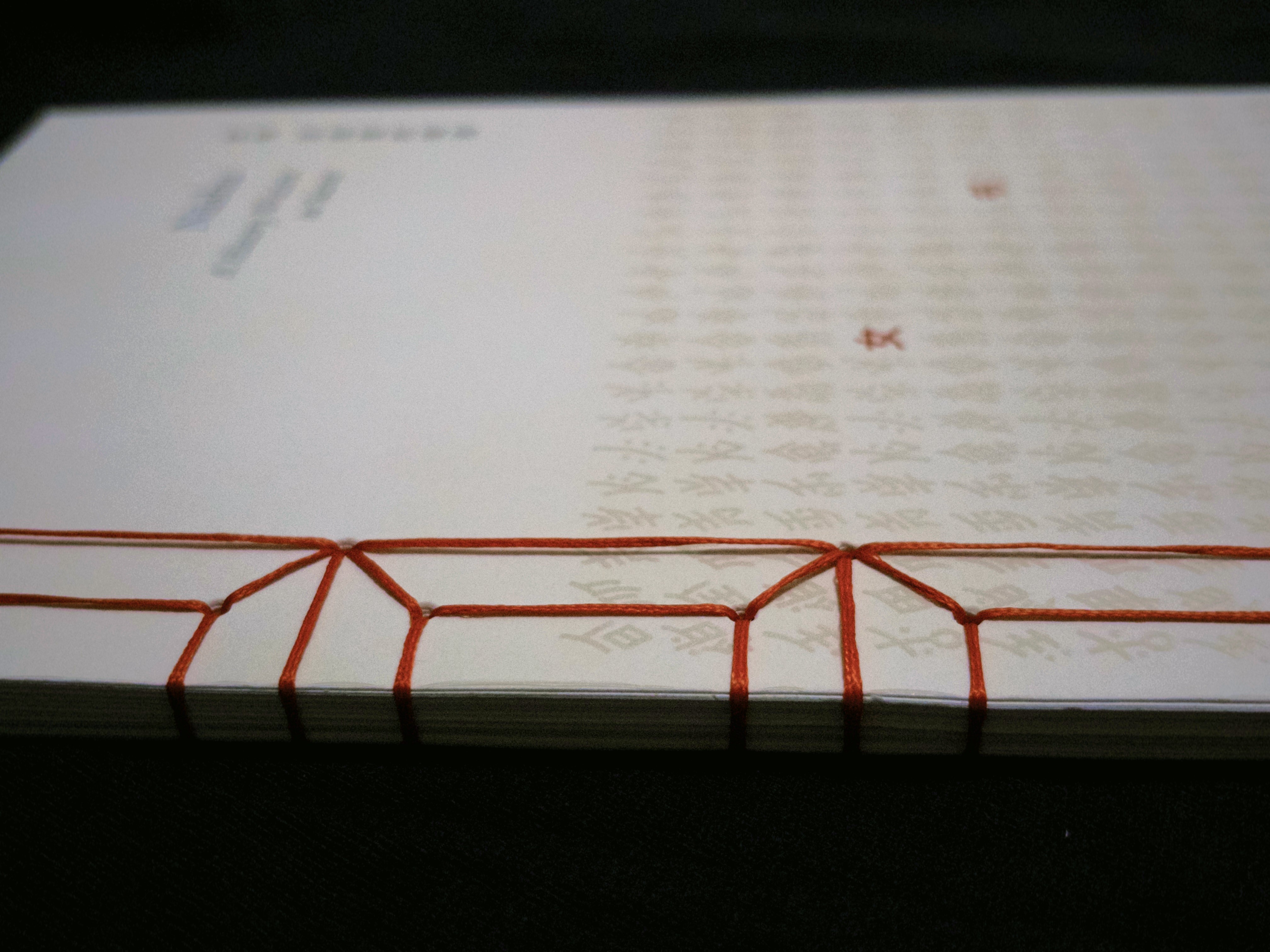
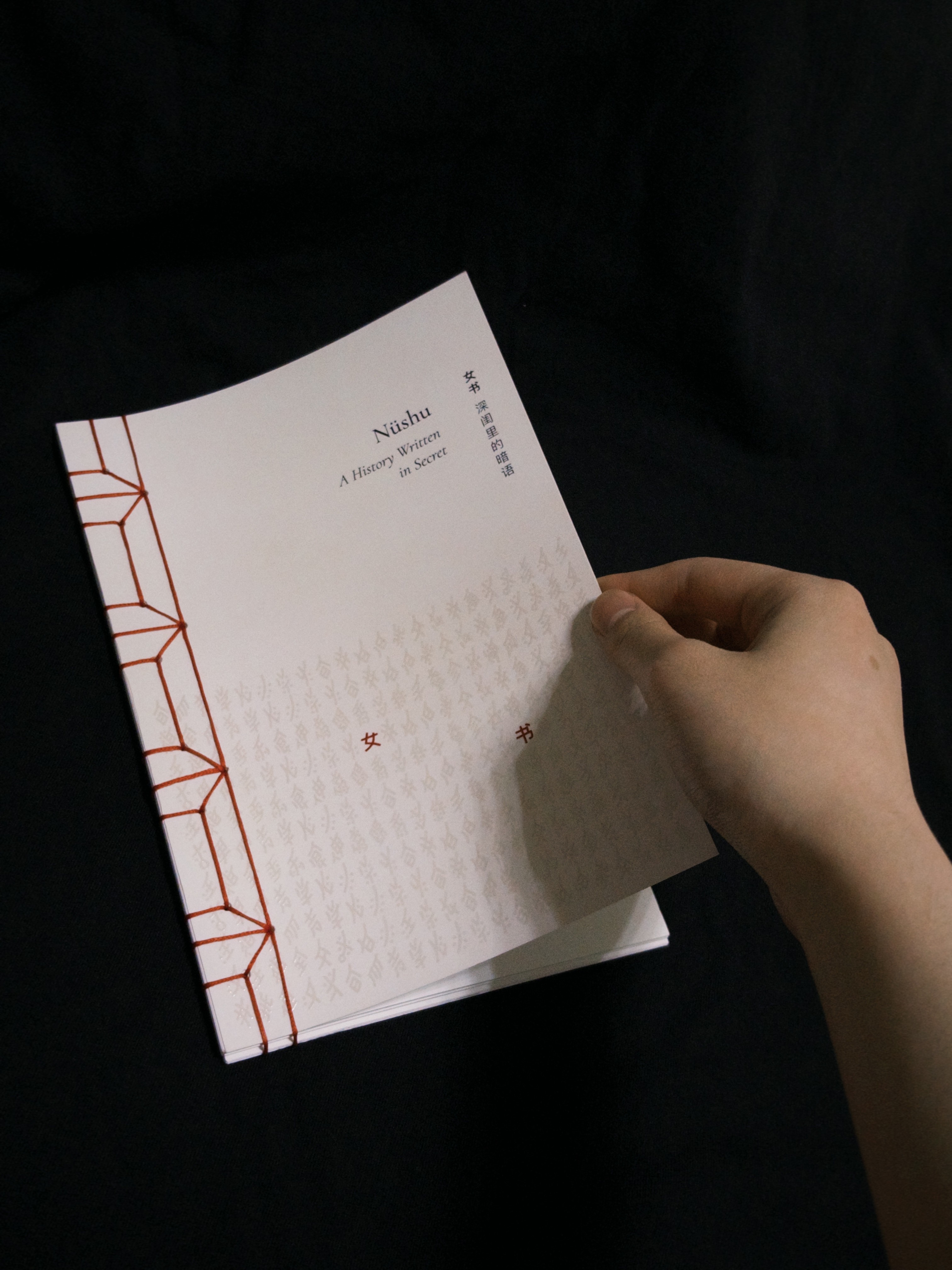
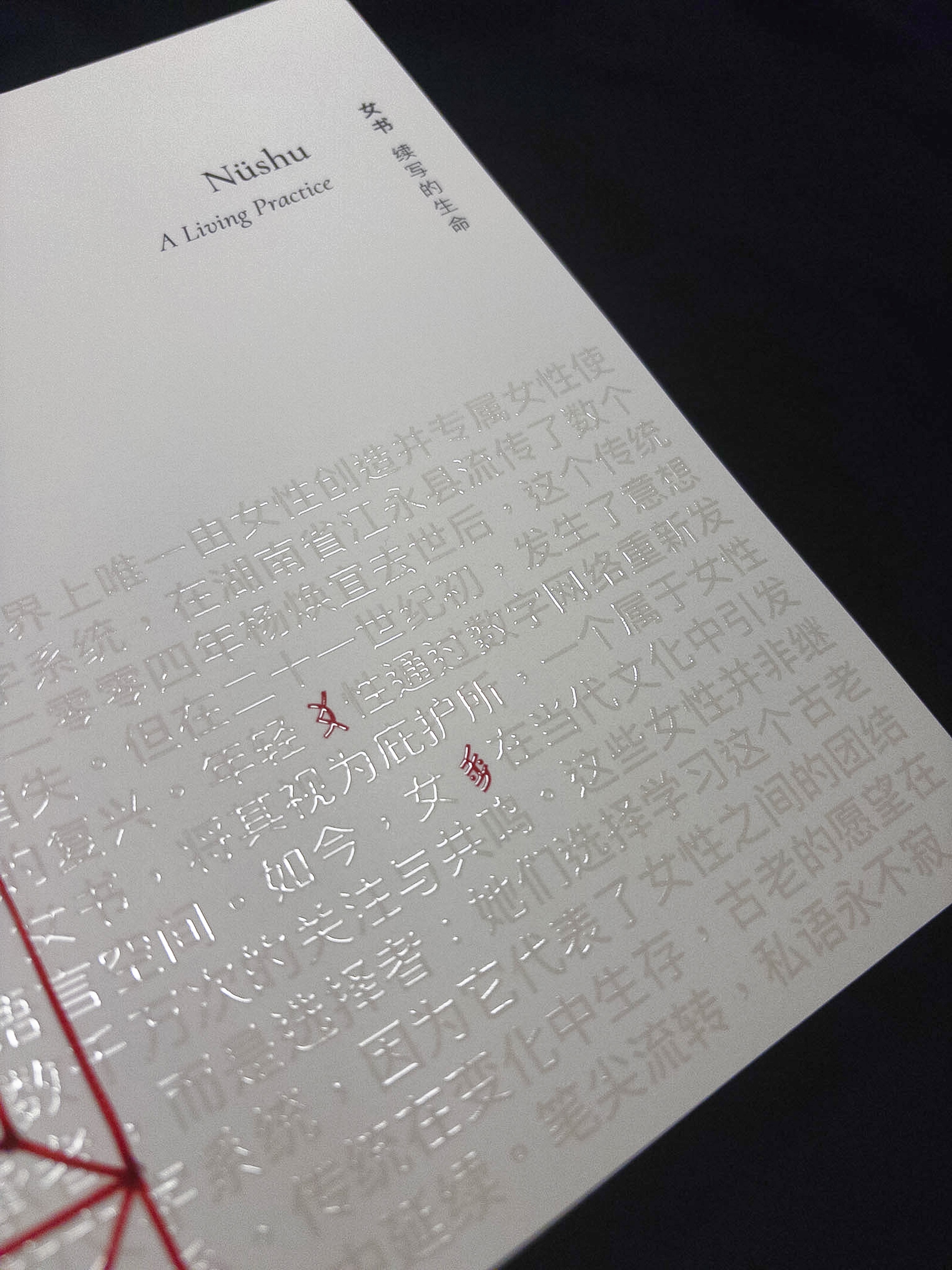
An A5 tête-bêche book exploring the history and modern revival of Nüshu. The binding references the 三朝书, or three-day missives, through a tortoiseshell stab stitch in red thread. UV spot varnish highlights the typography on both covers, allowing the script to emerge subtly through light and touch.
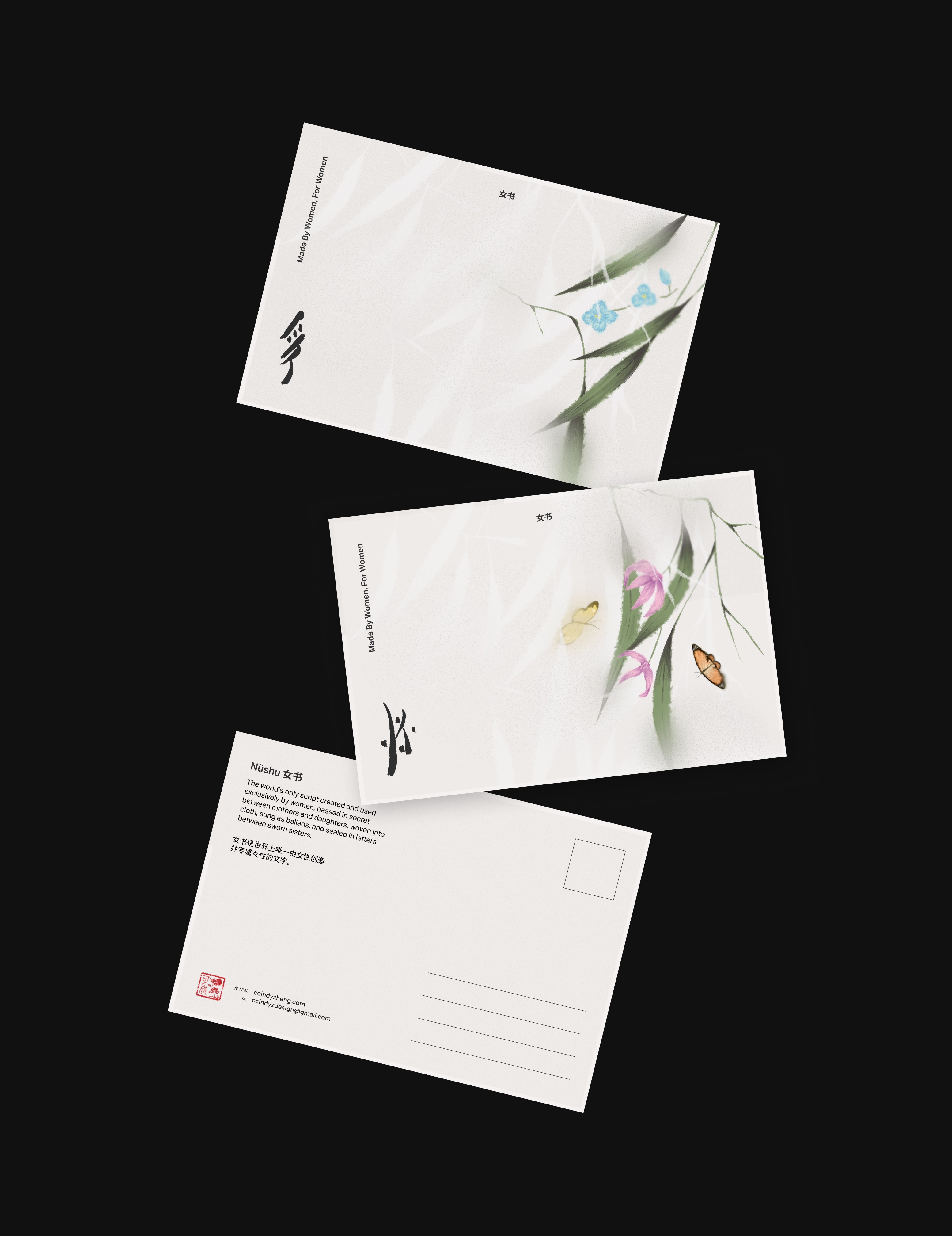
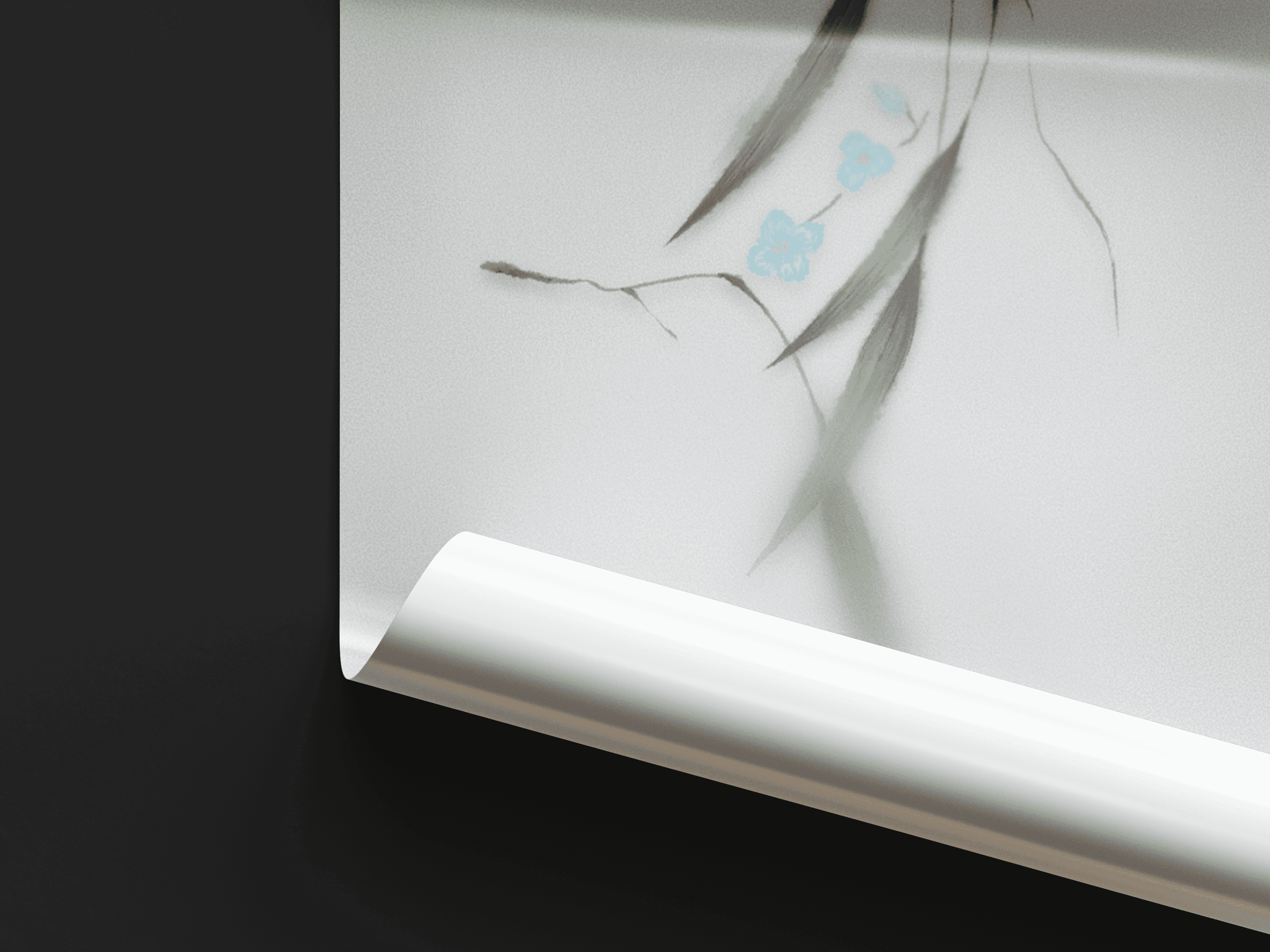
A series of four posters and three postcards, each featuring a unique Nüshu character set against willow leaf illustrations rendered in a delicate, ink-inspired style. The posters bring the script into a bold public-facing format, while the postcards distill the campaign into something personal and shareable, each backed with a short bilingual description of Nüshu and its significance.
TAKEAWAY
Designing this campaign taught me that research and visual language are deeply connected. Understanding why Nüshu looked the way it did, rooted in natural forms and passed down through hand, directly shaped every design decision, from the willow leaf motif to the binding of the book. Working across multiple formats also pushed me to think about how a single message translates differently through a book, a poster, and a postcard. In the end, I learned that designing for cultural awareness is an act of responsibility as much as it is one of craft.
MORE WORK