ROLE
TOOL
Figma, Maze.co, Webflow CMS, JS
UX/UI DESIGN

BACKGROUND
Radiate is York University's 2026 Design Graduate Show, celebrating the work and creativity of the graduating class. The website was created as a central digital destination to showcase student projects, introduce emerging designers, and provide visitors with information about the graduate exhibition. Beyond serving as an event platform, it was an opportunity to create a digital experience that reflects the diversity and individuality of the designers behind the work.
Graduate show websites often present students in uniform grids of thumbnails, making it difficult for individual designers to stand out. For employers and industry professionals, discovering relevant talent and understanding each designer's strengths can become a time-consuming process.
CHALLENGE
SOLUTION
We created Radiate as a centralized digital platform that gives every graduate a dedicated space to showcase their identity, contributions, and work. Through personalized student profiles, structured project showcases, and intuitive navigation, the website makes discovering emerging talent more engaging and accessible.
Before establishing the website's direction, we explored existing graduate show platforms and award-winning websites to understand how they presented student work, organized information, and engaged visitors.
RESEARCH


WIREFRAMING
After establishing the information architecture, we began exploring layouts and page structures in Figma Early wireframes focused on content hierarchy, navigation, and how student information would be presented. We moved from initial explorations to mid-fidelity wireframes, gradually defining the structure of the homepage, student profiles, and project detail pages. The website was planned for a three-phase launch to accommodate the time needed for CMS development, content collection, and event logistics. This phased approach allowed us to progressively build out the site as information and content became available.


USABILITY TESTING
To evaluate the website's usability, we conducted testing with 12 participants across three key areas: first impressions, navigation, and talent discovery. Overall feedback was positive, with a recommendation score of 4.3 out of 5. However, testing also revealed opportunities to improve wayfinding, readability, and consistency across the website.

A/B TESTING
We compared two project page layouts through an A/B preference test. Version A received slightly more votes, while participants favoured Version B’s title placement above the hero image. Feedback also highlighted the need for shorter, more scannable text and smaller images to improve content flow. These insights informed a third iteration with a more balanced, readable layout.
CMS IMPLEMENTATION
With 44 graduating designers and numerous projects to showcase, a structured content system was essential. As CMS Lead, I built three interconnected Webflow CMS collections for graduate profiles, projects, and tags, linking student information with their individual projects through reusable page templates. To manage content collection, I distributed forms in three phases covering graduate details, project information, and image updates. This streamlined content gathering while keeping information organized, consistent, and easy to manage across the website.

DESIGN SYSTEM
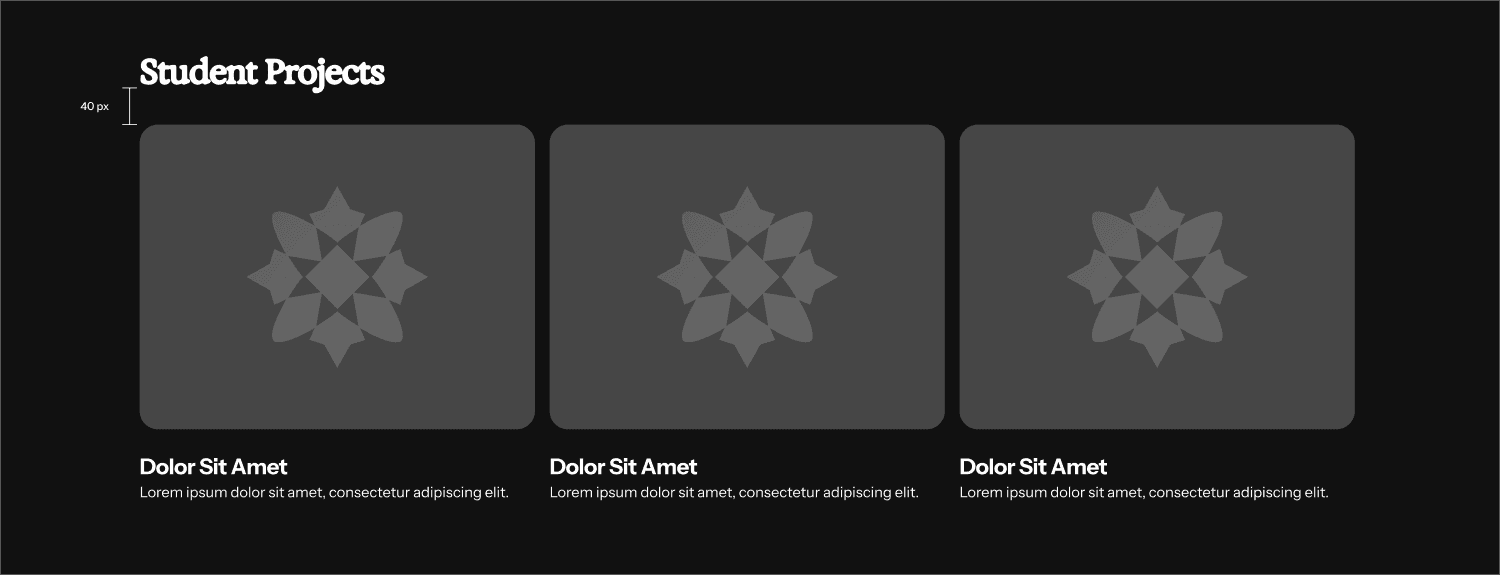
The interface balanced the expressive brand with the needs of a content-rich platform, using clear visual hierarchy, consistent typography, and structured layouts to keep each designer's work at the forefront. We developed a reusable design system covering typography, colour, grids, spacing, interactive elements, and navigation components. Usability feedback further informed refinements, helping maintain a consistent experience across all pages.


TAKEAWAY
Launched on April 3, 2026, Radiate became the central digital platform for the York University DESN 2026 Graduate Show, connecting graduating designers with employers, industry professionals, and the wider design community. Working on Radiate gave me the opportunity to explore how visual design, UI, and content management come together to create a functional website. It strengthened my understanding of designing for different audiences, managing content at scale, and balancing the visual experience with the systems behind it.

MORE WORK